On 7 October 2026 Al-Hal Net reported that Alaa Ghazal, a specialist in digital and information security, had published on Facebook screenshots of a tool that he says a Syrian security agency uses to monitor Facebook accounts and pages. He said he would give further details later, and has not named the agency. 1 Everything below is his account, as reported by Al-Hal Net, unless stated otherwise.
What he published
Published allegation
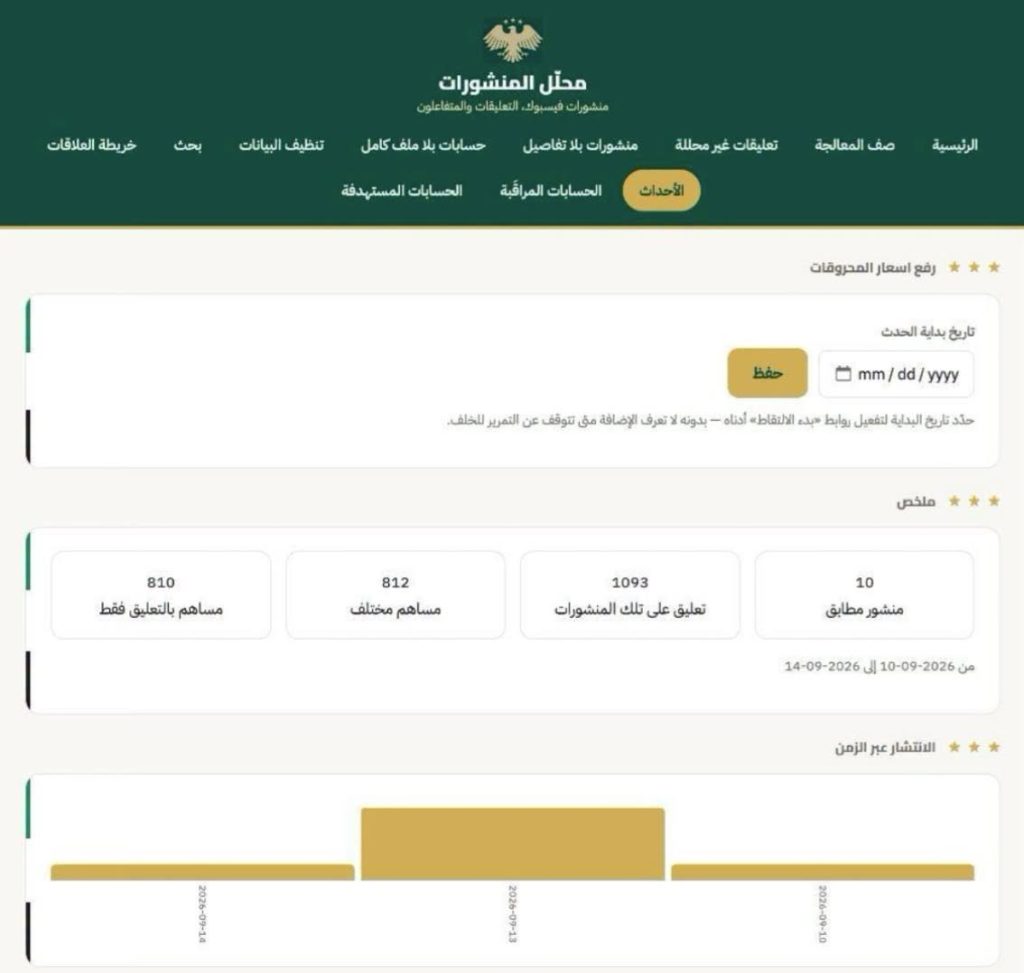
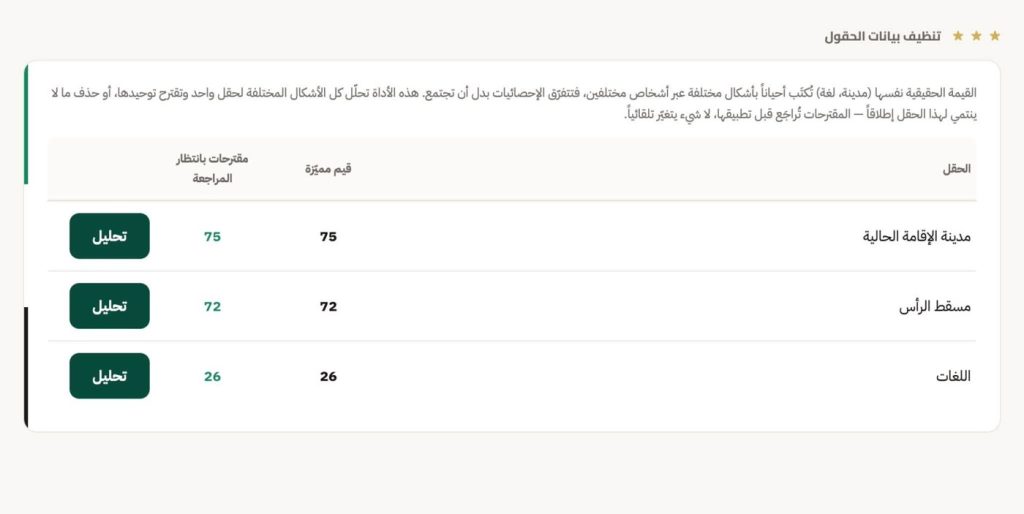
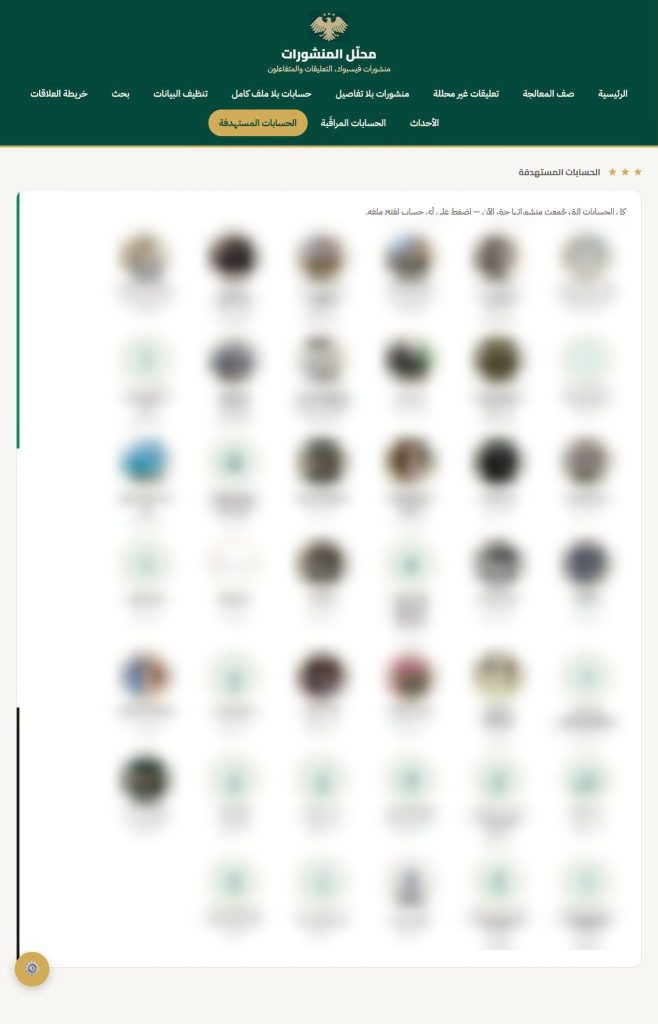
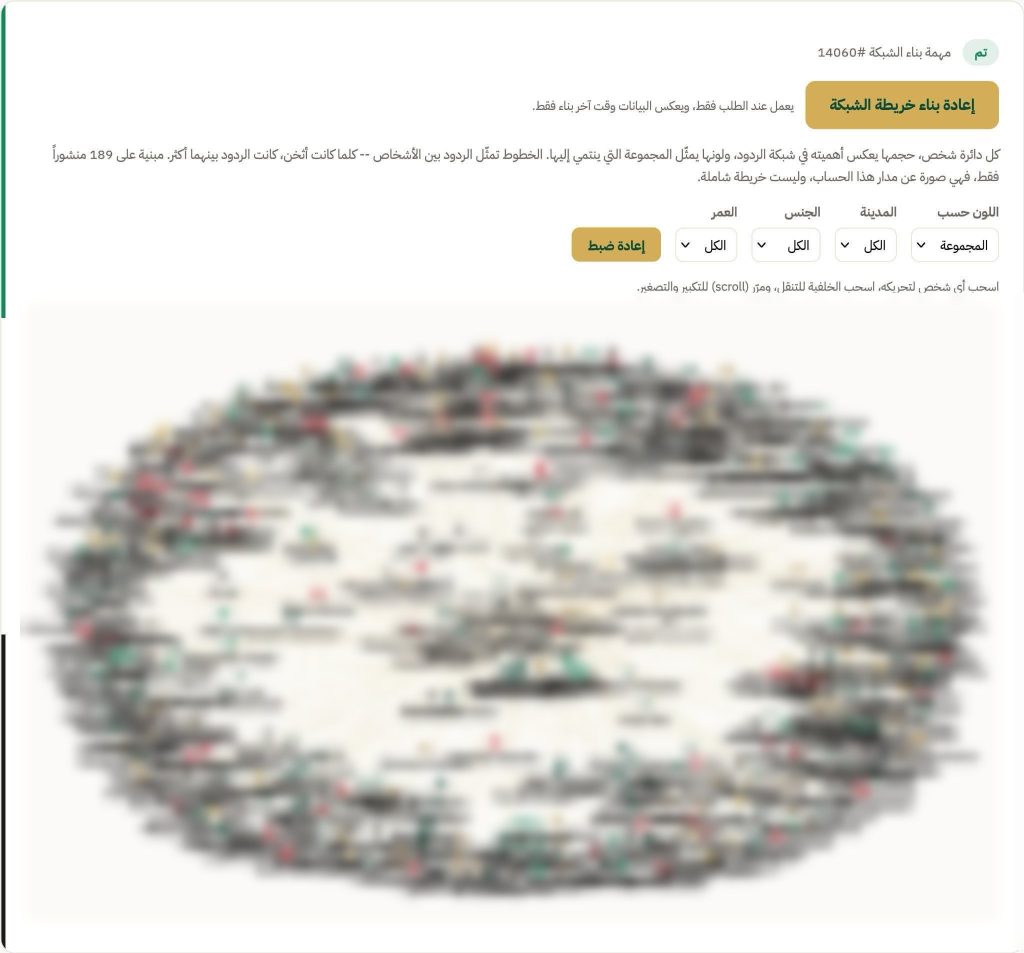
Ghazal says he reached a test version of the tool through a programming error. The interface in his screenshots is titled «محلّل المنشورات» (“Posts Analyzer”) and has sections named “monitored accounts”, “targeted accounts”, “events” and “relationship map”. 1
According to Ghazal, the tool:
- collects information about the owners of selected accounts — place of residence, hometown, marital status, workplace and number of followers — and saves periodic snapshots of the accounts; 1
- builds a file on each targeted account with a summary of its posts and of the people who like, comment on and interact with them; 1
- draws a “relationship map” linking accounts through comments, shares and likes, which can be filtered by city, sex and age; 1
- classifies the comments under posts by their stance — supportive, critical, neutral or unclear — in a section called “audience polarisation”; 1
- gathers the city, work and studies of an account’s audience and then analyses the posts of everyone who commented; 1
- follows keyword “events”: one example in the interface is named “fuel price increases” and collects the related posts, comments and participating accounts. 1
What he says it is used for
Published allegation
Ghazal says the tool is one of several that the authorities use “to pursue and track posts, remove them or restrict accounts”, citing the accounts of the activist Hassan Akkad and the lawyer Yasser Shalati as examples, and that automated accounts are used to flood posts with reactions. 1
In an earlier interview cited by Al-Hal Net, he said that security personnel force some detainees to unlock their phones, allowing their messaging applications to be examined. 1
What the screenshots show
The screenshots carry the eagle emblem used by Syrian state institutions. The “fuel price increases” event covers 10–14 September 2026, the period of the fuel-price protests. 2 One screenshot lists an account named “Alaa Ghazal” among the “targeted accounts”. In the screenshots that show accounts, we have blurred all names and pictures.
Context
Critics of the authorities have been prosecuted under the Assad-era Cybercrime Law No. 20 of 2022, which the Syrian Network for Human Rights and the Syria Justice and Accountability Centre have asked to be reviewed; see the dossier on the Hamsho settlement and the detention of Hassan Akkad. 3 4
Facebook’s rules and the right to privacy
If the tool works as Ghazal describes, it collects data from Facebook by automated means. Meta’s terms of service forbid this: “You may not access or collect data from our Products using automated means (without our prior permission) or attempt to access data you do not have permission to access.” Nothing published so far suggests that Meta gave any such permission. 5
That posts and comments are public does not take them outside the right to privacy. The UN human-rights office wrote in 2018 that “when information that is publicly available about an individual on social media is collected and analysed, it also implicates the right to privacy. The public sharing of information does not render its substance unprotected.” 6 A tool that records where identifiable people live and work, whom they interact with and whether their comments support or criticise a post — as this one is described — interferes with the privacy of every person it profiles, including people who only liked or commented on a post.
Syria is a party to the International Covenant on Civil and Political Rights, whose Article 17 protects everyone against “arbitrary or unlawful interference with his privacy”. 7 The Constitutional Declaration of 13 March 2025 makes the rights in ratified human-rights treaties an integral part of it (Article 12) and states that “the State protects the sanctity of private life, and any violation thereof shall be considered a crime punishable by law” (Article 13). Article 23 allows rights to be restricted by law where necessary for national security or public order. 8 The UN human-rights office says that surveillance must rest on a publicly accessible and precise law, be based on reasonable suspicion and be authorised by an independent body. 6 No law, judicial authorisation or oversight covering a programme of this kind has been published.
What this does and does not establish
The published screenshots show a tool designed to profile Facebook users, map their interactions and sort their comments by stance, and a named specialist attributes it to a Syrian security agency. We have not been able to verify the screenshots independently, Ghazal has not named the agency, and nothing published so far links the tool to a specific ministry or official. We will update this page if he or others publish further details. 1
Our call
Who Rules Syria? calls on the de facto authorities to:
- shut down this tool, and any similar programme for monitoring people’s social-media activity, immediately;
- delete all the data it has collected — profiles, account snapshots, relationship maps and comment classifications — including any copies shared with other bodies;
- state publicly which body built and operated it, on what legal basis, and how the people whose accounts were monitored will be informed.
If the tool is not a state tool, the authorities should say so and investigate who is using it under the state emblem.
The Hamsho settlement and the Akkad case
Sources
- Press Digital-security specialist: a Syrian security agency uses a tool to monitor Facebook accounts (Arabic) — Al-Hal Net, October 7, 2026
- Press Syria, self-made: The fight against expropriation — A People's Planet — Alex Simon (opinion), October 1, 2026
- Human-rights organisation SNHR calls for reviewing the Cybercrime Law and its enforcement mechanisms (statement on the arrest of Hassan Akkad) — Syrian Network for Human Rights, June 22, 2026
- Human-rights organisation The Weaponization of Inherited Legislation to Restrict the Civic Space in Syria’s Transition — Syria Justice and Accountability Centre, July 15, 2026
- Official record Facebook Terms of Service, section 3.2 (“What you can share and do on Meta Products”), consulted 7 October 2026 — Meta, October 7, 2026
- Official record The right to privacy in the digital age (A/HRC/39/29), paragraphs 6 and 35 — UN Office of the High Commissioner for Human Rights, August 3, 2018
- Official record International Covenant on Civil and Political Rights, Article 17 (Syria acceded on 21 April 1969) — United Nations, December 16, 1966
- Official record Constitutional Declaration of the Syrian Arab Republic (Arabic original; English translation published by ConstitutionNet) — Presidency of the Syrian Arab Republic, March 13, 2025