Career in Idlib
Supported by independent sources
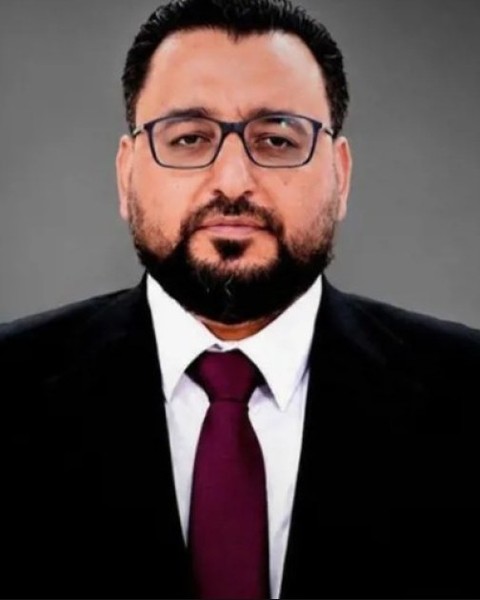
According to The Syrian Memory, Sweidan, known as Abu Hamza Qasioun, held economic and administrative posts in Hay’at Tahrir al-Sham’s institutions in Idlib, including director-general of the Money and Consumer Protection Authority, a body headed by Mohammed Omar Qadid. He ran the agricultural investment companies Al-Khadra (founded in January 2022) and Gheras (May 2022), and became director-general of Iktifaa when it was founded in October 2024. 1
Overlapping posts after the fall of Assad
Supported by independent sources
- From 4 May 2025: head of the National Committee to Combat Illicit Gain, set up by Presidential Decision No. 13 of 2025, while still director-general of Iktifaa. 1
- From June 2025: assistant to the Minister of Agriculture; from 15 November 2025 (Decree No. 252): deputy minister. 1
- Head of the agriculture and livestock sector of the Syrian Sovereign Fund (from June 2025) and member of the national import–export committee (from November 2025). 1
- 9 May 2026: appointed Minister of Agriculture by Decree No. 101, succeeding Amjad Badr. 1
After media criticism of these overlapping roles, he told Zaman al-Wasl in February 2026 that Iktifaa is an investment arm of the government and that he received only one salary; on 18 February 2026 he announced that he had left Iktifaa, which is now run by Mohammed Hanouf. 1 2
Iktifaa and the land of displaced families
Supported by independent sources
ARIJ, Middle East Eye and Syrians for Truth and Justice report that Iktifaa came to administer agricultural land, including pistachio and olive groves, belonging to families displaced from predominantly Alawite villages in northern Hama, through “investment” contracts the owners say they were pressed to sign, and that land is returned only to owners cleared by the Illicit Gains Committee, which Sweidan had headed since May 2025. 3 4 2 1
The settlement with Mohammad Hamsho
Supported by independent sources
In January 2026 the committee he chaired announced a “comprehensive settlement” with Mohammad Hamsho, a businessman sanctioned by the EU and the United States since 2011 over his ties to the Assad government, under a six-month voluntary disclosure programme the committee had launched at the end of December 2025. A committee source told al-Thawra the settlement followed extensive investigation of Hamsho’s assets and financial declarations; no amount was published. 5 6
Enab Baladi, citing unnamed sources close to the committee, estimated the funds and assets recovered at about $800 million. 6 Hamsho remains on the U.S., UK and EU sanctions lists (checked October 2026). 7 8 9
The settlement drew protests, outside the committee’s Damascus headquarters and in Jobar, Daraya and al-Qaboun. The National Commission for Transitional Justice said on 8 January 2026 that there is no amnesty for anyone who committed, financed or instigated serious violations, and the Syrian Legal Development Programme argues that the committee has no judicial mandate and that the settlement bypassed the courts. 6 10
None of these reports finds that Sweidan personally ordered abuses or profited from them, and no court or official audit has examined the overlap between his posts. 3 2
Read the dossier on Iktifaa and the land of displaced families in Hama