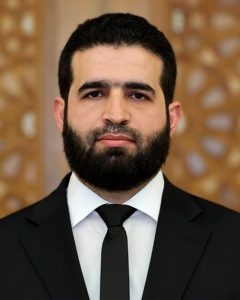
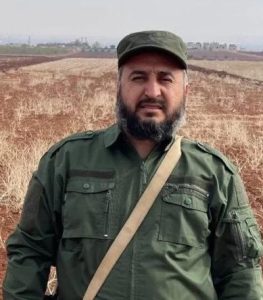
Between 14 and 19 July 2025, at least 1,707 people were killed in Sweida governorate in southern Syria, most of them from the Druze community, according to the conservative assessment of the UN Commission of Inquiry on Syria. 1 Forces of the Ministry of Defence, led by Murhaf Abu Qasra, and the Internal Security Forces of the Ministry of Interior, led by Anas Khattab, were sent in on 14 July after clashes between Druze factions and Bedouin tribes. 1 2 This article sets out what the UN, Amnesty International and Reuters documented about the conduct of those forces, what the two ministries said, and what has been done about accountability.
Three waves of violence
Supported by independent sources
- First wave, 14–16 July: government forces, including the Internal Security Forces and the Syrian Arab Army, and associated tribal fighters entered villages and then Sweida city. The Commission documented murders, direct and indiscriminate attacks on civilians, arbitrary arrests and abductions, torture, pillage, sexual and gender-based violence including rape, and attacks on religious buildings against members of the Druze community, accompanied by sectarian insults. 1
- Second wave: Druze armed groups, including those under the Suwayda Military Council (later the Suwayda National Guard), committed murder, torture, arbitrary detention and pillage against the Bedouin community, which was forcibly displaced from almost all the areas they held. 1
- Third wave: several thousand tribal fighters mobilised from across Syria looted and burned nearly every home in 35 predominantly Druze and mixed villages in the north and west of the governorate. 1
- The Commission recorded 1,190 Druze men, 99 women, 22 boys and 31 girls reported killed, around 70 Bedouins, and at least 225 members of government forces, many of them in Israeli airstrikes. Up to 155,000 people remained displaced in early 2026. 1
The government operation
Supported by independent sources
On 14 July the Interior Ministry announced the operation and later said that forces of the Defence and Interior ministries had entered Sweida to maintain security and protect civilians without discrimination; units from several Ministry of Defence divisions took part. On 15 July, after the Druze spiritual leader Sheikh Hikmat al-Hijri initially called on local factions not to resist, the Defence Minister announced a complete ceasefire following an agreement with the city’s notables. After reports of massacres, al-Hijri reversed his position and called for armed resistance. 1
In the cases it documented, the Commission found that many members of government forces, alongside tribal fighters, took part in violations against civilians or did not intervene when present; in a few cases security forces intervened to stop physical harm to civilians. Some carried swords or wore patches with the Shahada on their uniforms. 1
Executions of civilians
Supported by independent sources
- Near Tishreen roundabout in central Sweida, about a dozen armed men in camouflage uniforms without insignia, led by a member of the Internal Security Forces, forced eight civilian men out of a family villa, marched them to the roundabout and executed them at close range, filming the killings. Groups of Syrian Arab Army and ISF members then looted the villa. 1
- On the evening of 16 July a group of Syrian Arab Army and ISF members approached a guesthouse where about 60 people were sheltering, beat the men with iron bars, forcibly shaved the moustaches of two elderly men and shot dead 16 men against a wall; a 14-year-old boy was abducted and beaten. 1
- In another filmed case, armed men ordered three displaced young men to throw themselves from a third-floor balcony and shot them as they climbed over the railing. The man who appears to direct the others has reportedly been identified as an ISF member; the government told the Commission that at least one perpetrator had been arrested. 1
- Amnesty International documented 46 extrajudicial executions of Druze men and women on 15 and 16 July in Sweida city and its outskirts, in homes, a public square, a school, a hospital and a ceremonial hall, after government forces had entered the city and declared a curfew. It verified videos of armed men in military and security uniforms, some with official insignia, including men riding trucks marked with the Interior Ministry’s logo; at least four wore a black patch bearing the Shahada. 3
- Reuters verified a video of eight men in civilian clothes being led in single file by armed men west of Tishreen Square and a separate video of armed men opening fire on the same unarmed men as they knelt in the roundabout; relatives said seven of them belonged to one family and one was a Syrian-American citizen. It also verified a video of more than a dozen bodies in a family guesthouse, where a survivor said armed men had opened fire on those gathered there. 2
Sexual violence and abductions
Supported by independent sources
The UN Commission documented sexual violence against Druze women during incursions and house searches, including rape, forced nudity, invasive body searches and sexual threats. Eleven Druze women and four girls were abducted and later released between July and November 2025; the alleged perpetrators included tribal fighters and Internal Security Forces personnel. Three Bedouin women and a girl were still held by the Suwayda National Guard. 4 1
What the two ministries said
Supported by independent sources
On 22 July the Defence Minister said he was aware of “shocking and serious violations” committed in Sweida by an unknown group wearing military uniforms, and the ministry pledged to investigate and hold the perpetrators accountable. The Interior Ministry condemned the circulating videos of “field executions carried out by unidentified individuals” and also pledged an investigation. 3 2
The Defence Ministry set up a committee to verify the affiliation of individuals involved in the violence, and the Interior Ministry announced an inquiry into events at Sweida’s national hospital. By March 2026 the UN Commission had received no update on the outcome of either process. 1
Amnesty International wrote to the Ministers of Interior and Defence on 12 August 2025 with its preliminary findings, asking about the role of state forces and the steps taken to hold perpetrators to account. It had received no response when it published its findings on 1 September. 3
Accountability
Supported by independent sources
On 31 July 2025 the Ministry of Justice set up a National Inquiry into the Sweida events (decree No. 1287 of 2025). The UN Commission welcomed it, but noted that it had not been allowed into areas outside government control. In its reply to the Commission, the government said that 20 accused members of the security forces and the army were being held by the military police and had been indicted, alongside ten other accused. The Commission noted that the responsibilities of senior officials and commanders had not yet been clarified. 1 4
According to Enab Baladi, when the National Inquiry presented its final findings in March 2026 it reported 1,760 dead and 2,188 injured, said that 23 members of the security forces and army had been detained and were being tried in public, and described the violations as individual acts rather than systematic ones. 5
The UN’s legal findings
Supported by independent sources
The Commission found gross and systematic human rights violations by government forces, and violations that may amount to war crimes by government forces, tribal fighters and Druze armed groups. It concluded that the killings by government and tribal forces, including collective executions and the targeting of affluent families, were not random or isolated and that the attack was widespread and systematic; should these elements be established through further investigation, the acts may amount to crimes against humanity, including murder, torture and persecution on religious grounds. It also noted that the government had taken steps towards accountability, including the National Inquiry and the arrest of some alleged perpetrators seen on social media. 1
What this does and does not establish
The UN Commission attributes violations to members of government forces under both ministries, as well as to tribal fighters and Druze armed groups, and says the responsibilities of senior officials and commanders have not yet been clarified. None of the sources finds that Murhaf Abu Qasra or Anas Khattab personally ordered or authorised the killings. What is documented is that forces under their ministries took part in the operation, that members of those forces committed or did not prevent violations, and how the ministries responded. 1 3
Profile: Murhaf Abu Qasra · Profile: Anas Khattab · The March 2025 coastal massacres
People in this article
Sources
- Official record International human rights law and international humanitarian law violations committed during the July 2025 violence in Suwayda, Syria (A/HRC/61/CRP.7) — UN Independent International Commission of Inquiry on the Syrian Arab Republic, March 27, 2026
- Press Left with bloodstains and bullet holes, Syria’s Druze grieve loved ones — Reuters, July 27, 2025
- Human-rights organisation Syria: ‘Killed in cold blood’ – government and affiliated forces extrajudicially executed Druze people — Amnesty International, September 1, 2025
- Official record Report A/HRC/61/62 (covering 8 December 2024 – 31 January 2026), including the government’s note verbale of 28 January 2026 — UN Independent International Commission of Inquiry on the Syrian Arab Republic, March 12, 2026
- Press Syrian national committee submits final report on Suwayda events — Enab Baladi, March 2026
Note: Could not be fetched by the editors (site blocks automated access); figures corroborated by other reports of the committee's press conference of 17 March 2026.