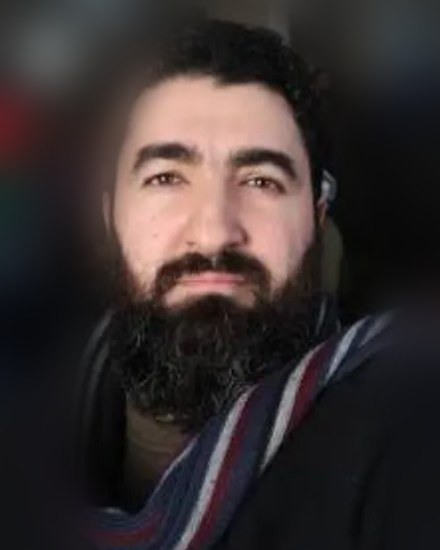
Australian sanctions
Supported by independent sources
Australia’s Department of Foreign Affairs and Trade lists Abraham Succarieh, also recorded as “Abraham Sukkarieh” and “Abu Essa”, under its counter-terrorism sanctions implementing UN Security Council resolution 1373. He was first listed on 16 August 2018; the listing, which subjects him to targeted financial sanctions, was renewed in 2020, 2023 and 2026. 1
In 2016 a Queensland court sentenced his brother Omar to four and a half years in prison for offences under Australia’s foreign incursions and recruitment law, two of which concerned about A$57,000 given to Abraham in early 2014. Abraham was not a defendant in that case. 2
“Abu Mariam” and the economic committee (Reuters, July 2025)
Supported by independent sources
Reuters identified Succarieh as “Abu Mariam al-Australi”, the leader of the economic wing of an unannounced committee that took control of companies and negotiated settlements with Assad-era businessmen, and as the person behind the X account “Ibrahim bin Mas’ud”. According to Reuters, he and Hazem al-Sharaa edited the final text of amendments to the investment law. 3
Australia’s government confirmed to Reuters that he remains under sanctions but declined to comment on his role. Succarieh did not respond to Reuters’ questions. 3
The Sovereign Fund
Published allegation
At the first Syrian-Emirati investment forum in May 2026, the organisers’ material named “Ibrahim Succarieh” as director-general of the Syrian Sovereign Fund, according to The Syria Report as summarised by Zaman al-Wasl. 4
No decree appointing a director-general has been published, although the fund’s founding decree (No. 113 of 2025) requires one. The Syrian Observer describes him as a de facto director without a published appointment. 5 6