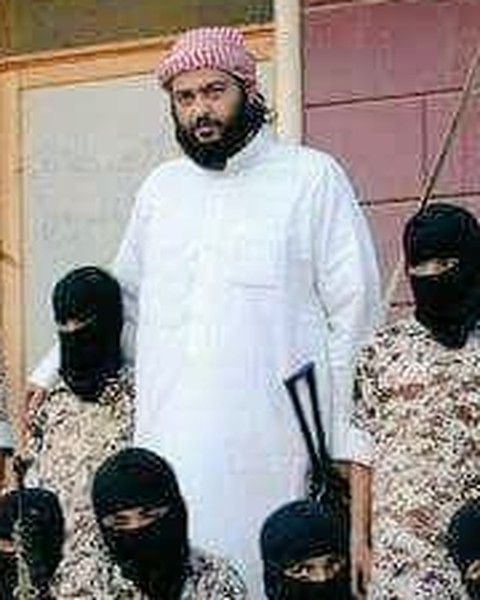
From Saudi Arabia to the Syrian war
Supported by independent sources
According to The Syrian Memory, he studied comparative jurisprudence at Imam Muhammad ibn Saud Islamic University, preached in Saudi Arabia and lived in Mecca before travelling to Syria, where he arrived in October 2013, saying he wanted to resolve disputes between the Islamic State group and other factions. He worked as an independent sharia judge between factions, met ISIS leaders to try to bring the group before a sharia court, and in January 2014 launched a mediation initiative, before turning against the group, which he later called “Khawarij”. 1
He took part in founding the Jaysh al-Fatah coalition and became its chief sharia judge; his name was associated with the battles of Idlib and Aleppo. In August 2016 he said he would no longer remain independent. From 2017 he disagreed with the leadership of Hay’at Tahrir al-Sham over how it ran the areas under its control, and between 2019 and 2020 he withdrew from public view and lived in Turkey. 1
An archival clip shown by Al Bawaba in September 2026 shows him promising a fighter that “this hero” would be “a groom in the gardens of bliss tonight” with the houris; the outlet says he persuaded thousands of young men to fight on that basis. 2
Sanctions
Supported by independent sources
The U.S. Treasury listed him as a Specially Designated Global Terrorist linked to al-Nusrah Front, the precursor of Hay’at Tahrir al-Sham, recording a date of birth of 30 October 1987 in Al-Qassim. His listing was removed on 24 August 2026, in the action that also revoked Hay’at Tahrir al-Sham’s designation. 3 4 We found no current UK, EU or UN listing.
Listed as a terrorist by Saudi Arabia and its allies (2017)
Supported by independent sources
On 8 June 2017, during their dispute with Qatar, Saudi Arabia, Egypt, the UAE and Bahrain published a list of 59 individuals and 12 entities they designated as terrorists linked to Qatar; it includes “Abdullah Mohammed Sulaiman al-Muhaysini – Saudi”. 5 We have found no announcement removing him from that list.
The Saudi newspaper Okaz reported that he had left Saudi Arabia when he learned that the security services were about to arrest him, and Al Arabiya described him as “wanted by Saudi Arabia”. 6 7
Recruiting fighters and a suicide attack in Aleppo (2016)
Supported by independent sources
Okaz reported on 29 October 2016 that, during the battle for Aleppo, al-Muhaysini sent a young Saudi fighter of Jabhat Fateh al-Sham to carry out a suicide attack on Syrian army positions, and that in a video recorded beforehand he told him he was “minutes” from paradise and the houris. Al Arabiya, which published a still from the video, describes the fighter as a teenager. 8 7
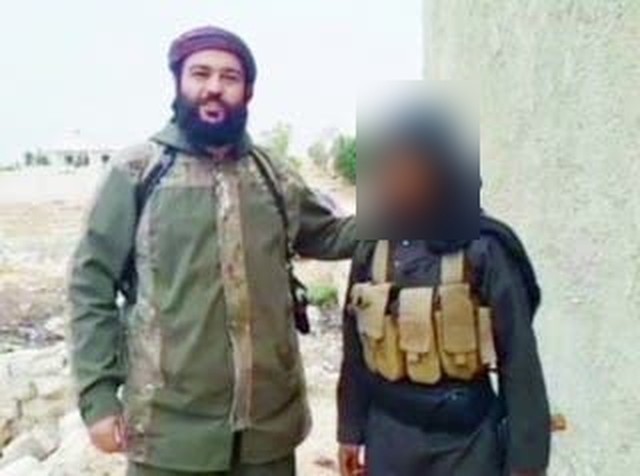
Published allegation
Al Arabiya, writing during the 2017 Gulf dispute with Qatar, also says he was known for appearing in videos promising recruits the houris and urging them to join al-Nusra, that he was behind a social-media campaign urging Saudi students abroad on scholarships to join the fight, and that between 2013 and 2015 he ran fundraising campaigns in Qatar for weapons for armed groups in Syria, supported on several occasions by the Qatari financier Khalifa al-Subaiei. 7 We have not been able to verify these claims independently.
After the fall of Assad: Homs and a new investment group
Supported by independent sources
According to The Syrian Memory, after December 2024 he settled in Homs, where he owned property from before the revolution, devoted himself to preaching and took a leading role in the al-Huda preaching and relief association. 1
In 2026 Zaman al-Wasl reported that he and partners whose identities were not disclosed had formed the “Syrian-Gulf Investment House”, with initial capital of more than a quarter of a billion dollars and six companies (Amar Real Estate Development, Swiss Cottages for tourism and hotels, Infinity Cars rental, Food Road for catering to institutions and hospitals, Asir Time for drinks and sweets, and Itra for software and cybersecurity), starting in Damascus, Homs and Idlib. 9 Earlier, the paper reported that Amar was launched in Damascus in the presence of government figures, offering interest-free loans of $5,000 each to rebuild 10,000 war-damaged homes, a $50 million programme starting from Hasya in Homs governorate. 10
Al-Muhaysini called the paper’s claim that he had no known business in Syria before the revolution “a blatant lie”, saying he had owned real estate, businesses, showrooms, farms, villas and shops in Homs and Damascus, with partners, some of whom are still his partners, and that his current work focuses on reconstruction. Arabi21 notes that he comes from a wealthy Saudi family and that this account matches his earlier posts. 11
What remains unclear
- Who his partners in the investment group are, and where its capital comes from. 9
- Whether he has any relationship with the current authorities beyond the presence of government figures at the Amar launch; we have found no official role. 10
- His date of birth: the U.S. record gives 1987, while The Syrian Memory gives 1965. 3 1