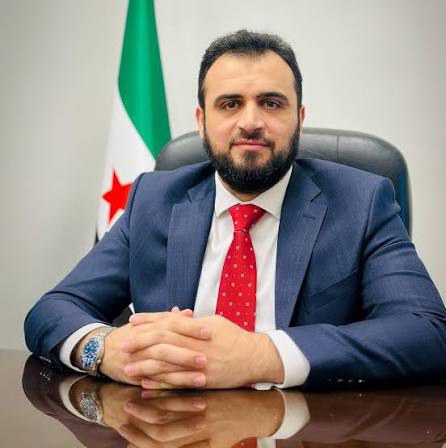
Background and nom de guerre
| Item | Information |
|---|---|
| Origin and education | From al-Shayfuniyah in Eastern Ghouta; studied law at Damascus University before the revolution. 1 |
| Abu Ali al-Zubair | The Syrian Memory documents that he joined Jabhat al-Nusra in Eastern Ghouta and held security and administrative posts as “Abu Ali al-Zubair”, then continued within Jabhat Fateh al-Sham and HTS. 1 |
| Salvation Government | Assistant Minister of Development, 2023–2024. 1 |
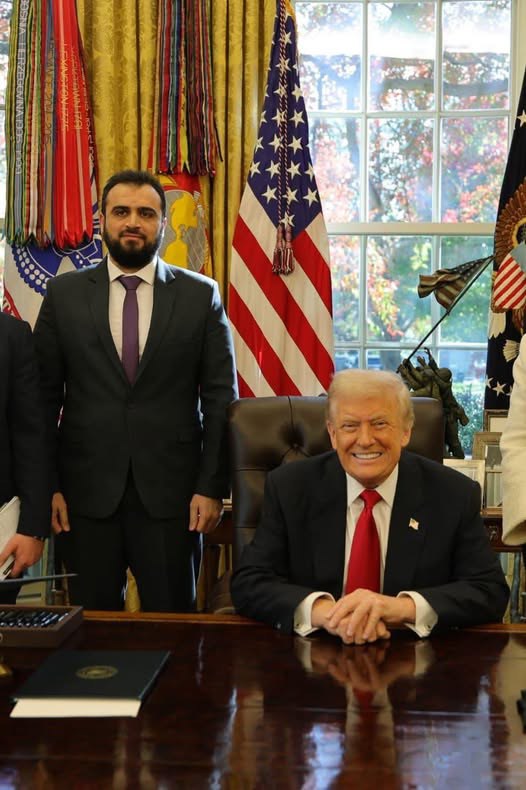
| After 2024 | Moved to the Directorate of Communication and Protocol, then the Directorate of International Cooperation at the Foreign Ministry; helped coordinate official visits, including to the United States. 1 2 |
The Adra al-Omaliya massacre
According to testimony
In another al-Dabbash episode, published on 16 May 2026, Qadish was presented under the title “Abu Hamza Protocol”, described as “the executioner of Ghouta” and accused of taking part in the Adra al-Omaliya massacre. 3
Supported by independent sources
The Adra al-Omaliya massacre took place in December 2013. Multiple testimonies and reports attributed abuses against civilians to Islamist factions including Jabhat al-Nusra and Jaysh al-Islam. 4
However, this research found no reliable independent source personally linking Qutaiba Qadish to carrying out the massacre. The personal link therefore remains an allegation attributed to al-Dabbash.
The Washington visit
According to testimony
Al-Dabbash said that Qadish’s presence in the delegation linked to the Washington visit drew criticism of President Donald Trump in the U.S. press because of the past of some delegation members. 3
Verification status: independent sources confirm that Qadish helped coordinate presidential visits, including to the United States, and took part in official delegations to Washington. The specific U.S. article criticising Trump over Qadish’s presence has not yet been identified, so this point is recorded as al-Dabbash’s account. 1 2